On this page:
- This is some text inside of a div block.
- This is some text inside of a div block.

%20(1).png)
If you've been searching for a ChannelAdvisor alternative for your ecommerce business, you're not alone. Since the platform rebranded as Rithum in 2023, many sellers have found themselves frustrated with rising costs, complicated pricing structures, and lengthy contract commitments. Between annual fees, steep revenue-sharing percentages, and additional charges for implementation and channel integrations, the cost of using ChannelAdvisor adds up fast.
The good news? Unlike when ChannelAdvisor initially launched back in 2001, there are better options on the market today. Whether you're a small business looking to expand into multichannel selling or an established seller wanting to cut costs without sacrificing functionality, knowing your options is the first step to making the right choice for your business. In this guide, we'll cover seven of the top ChannelAdvisor alternatives for ecommerce sellers in 2026.
Key Takeaways
If you've been using ChannelAdvisor for a while, you've probably noticed some changes. The platform was acquired by CommerceHub in 2022, then rebranded as Rithum in 2023. While it still works, a lot of sellers have started looking elsewhere, and for good reason.
For most sellers, the biggest issue is cost, and ChannelAdvisor's pricing model can get expensive fast. You're paying annual fees, implementation costs for each channel you connect, plus a percentage of your revenue that ranges from 1.3% to 2.4%, meaning that the more you sell, the more you pay. For growing businesses, watching your management platform bite into your revenue on top of marketplace selling fees and hosting costs can be frustrating.
Money isn't the only issue, though. Sellers also report slow customer support, complicated setup processes, and interfaces that feel outdated compared to newer platforms. If you've ever found yourself paying for features you don't use while wishing the platform had better tools for the things you actually need, you're not alone.
Finally, ChannelAdvisor requires sellers to sign 2-year contracts, which can feel restrictive when your business needs are constantly changing. If things slow down or you realize the platform isn't the right fit, you're stuck until your contract ends.
When evaluating alternatives to ChannelAdvisor, it's important to identify the drawbacks of your current workflows and focus on the features that will actually make your day-to-day easier. Instead of getting distracted by impressive-sounding capabilities you'll never use, take a moment to understand what's eating up your time, what's costing you sales, and what's limiting your growth.
With an understanding of your specific business needs in mind, begin evaluating each platform on the basics you need for multichannel selling. Real-time inventory synchronization is non-negotiable – without it, you risk overselling and damaging your business on every channel. Equally important is ensuring that the platform integrates with the sales channels that are actually relevant to your current needs and future growth goals. There's no point paying for bulk channel integration packages that aren't relevant to your selling needs; if you're only selling on Amazon, eBay, Walmart, and Shopify, for example, you need a multichannel selling manager that integrates with these channels without forcing you to pay for channels you don't need.
Then, there's the question of costs – transparent, flexible pricing can save you from unpleasant surprises down the road. Avoid platforms with hidden fees, revenue-sharing models, or lengthy contracts that lock you in. Instead, aim for platforms with straightforward monthly or annual pricing that scales with your business.
Finally, test the platform yourself during a free trial if one is available and make sure it actually matches your workflow before you commit.
ChannelAdvisor (now Rithum) is a solid multichannel platform, but its enterprise pricing, long implementation timelines, and revenue-share model send many sellers looking for alternatives. Here are seven worth considering.
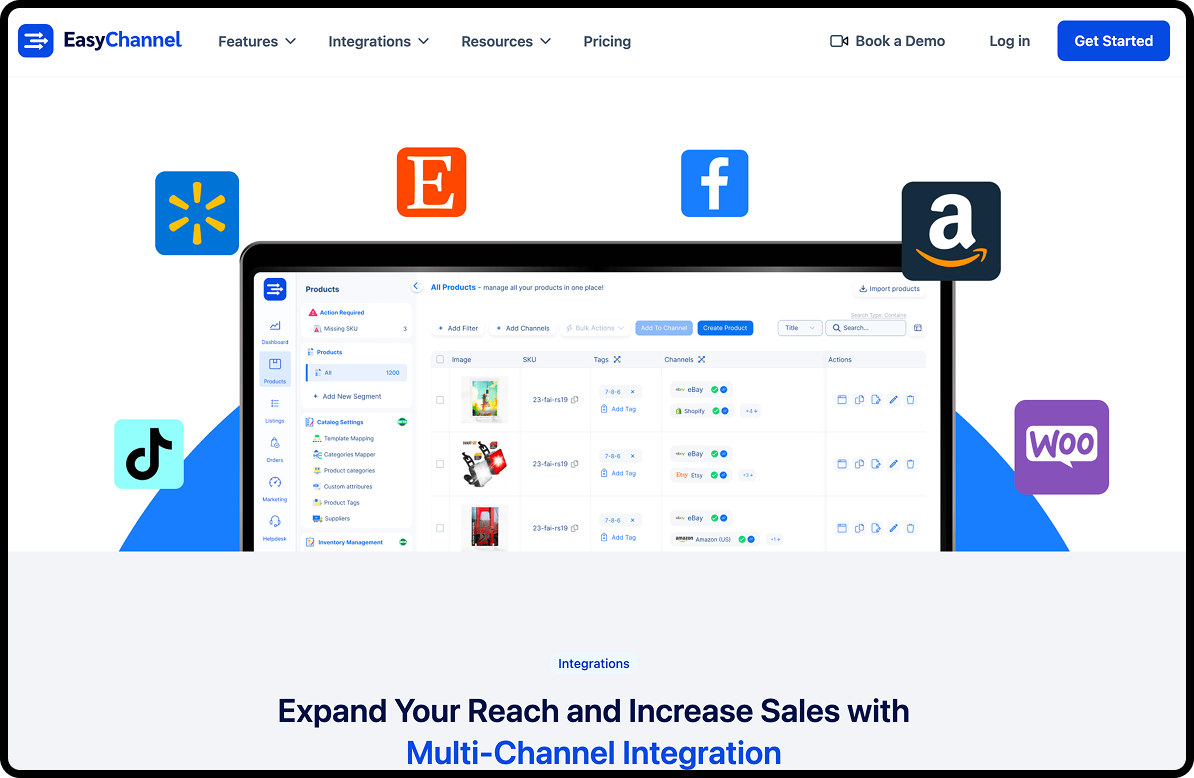
EasyChannel is an AI-powered multichannel selling platform designed specifically for sellers who want a tool that can facilitate their growth at every step of their selling journey. The platform offers transparent, affordable pricing starting at just $39 per month (significantly less than ChannelAdvisor) while providing everything sellers need for efficient multichannel growth. EasyChannel integrates with major marketplaces including Amazon, eBay, Walmart, and Etsy, plus shopping carts like Shopify, WooCommerce, and BigCommerce, and even social selling channels like TikTok, Instagram, and Facebook. It offers automatic real-time inventory sync to prevent overselling, a multichannel order management system that brings orders from all your sales channels into one dashboard, and AI-powered listing optimization tools to create better product titles, descriptions, and more across all your channels. EasyChannel is designed to be user-friendly at every level, so you can get up and running quickly without lengthy and costly setups.
EasyChannel also has an advanced inventory management system with support for multiple warehouses, allowing you to keep an eye on inventory levels no matter how many warehouses you have. Plus, you can assign bin locations to each product for effective tracking and warehouse management. If you prefer to work with Amazon or Walmart for fulfillment, you can use EasyChannel to completely automate Amazon's FBA/MCF or Walmart's WFS to fulfill orders for all your sales channels.
Unlike ChannelAdvisor, EasyChannel doesn't charge revenue-sharing fees or lock you into multi-year contracts. Its pricing is transparent and straightforward, and seamlessly scales with your business as you add more products and channels. Customer support is included at no extra cost, with responsive help available when you need it.
EasyChannel offers a 14-day trial for $1 with full features and no credit card required, so you can test it out and make sure that it's a good fit for your business before subscribing.
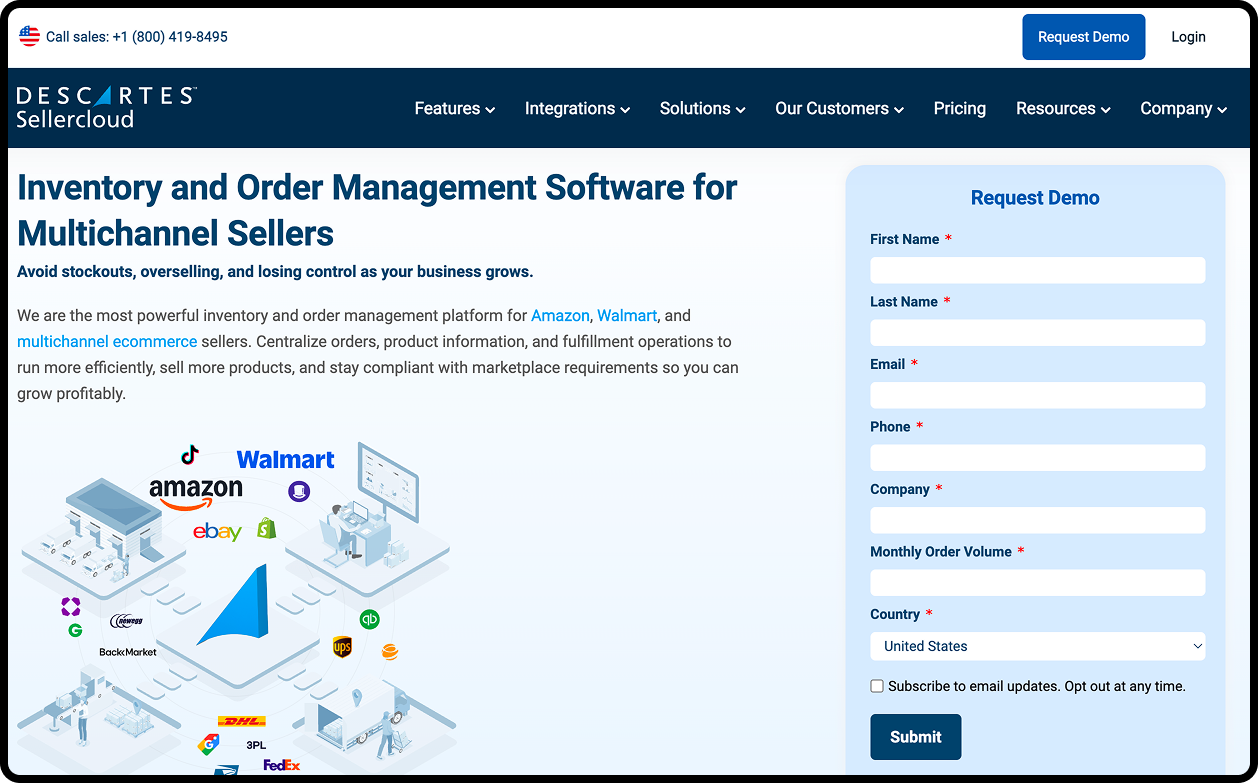
Sellercloud is a multichannel platform that's been around since 2010, offering inventory management, order processing, and warehouse management capabilities. The platform integrates with both marketplaces and shopping carts, and positions itself as a solution for sellers who need extensive customization options.
Sellercloud offers custom plugins and a customizable order rule engine that work well for businesses with complex workflows or unique requirements. The multi-warehouse inventory management system tracks inventory across locations, and includes purchase order management with predictive purchasing and low stock alerts.
Like ChannelAdvisor/Rithum, Sellercloud doesn't publish its pricing transparently on its website. Instead, it offers tailored pricing based on each client's needs. According to user reports, costs start at around $1000 per month, with additional per-transaction fees that vary based on order volume. Sellercloud also charges a one-time channel integration fee. For most mid-sized sellers, total monthly costs typically range from $1000 to $2000 or more depending on order volume and the number of channels connected, and that's without the one-time setup fees.
One of the downsides of Sellercloud is that it is a vast and complex system with a steep learning curve. Plus, in addition to being pricey, the setup process can take anywhere from a few weeks to well over a month. Ultimately, Sellercloud can be a powerful tool, but it's far from being a plug and play system. It requires extensive guided setup, takes a while to get the hang of, and costs far more than most small and medium sellers can realistically afford. As a multichannel solution, it works best for mid-to-large businesses with technical teams. If you're a smaller operation looking for something you can set up quickly and run without a large team, however, you'll likely find it overwhelming.
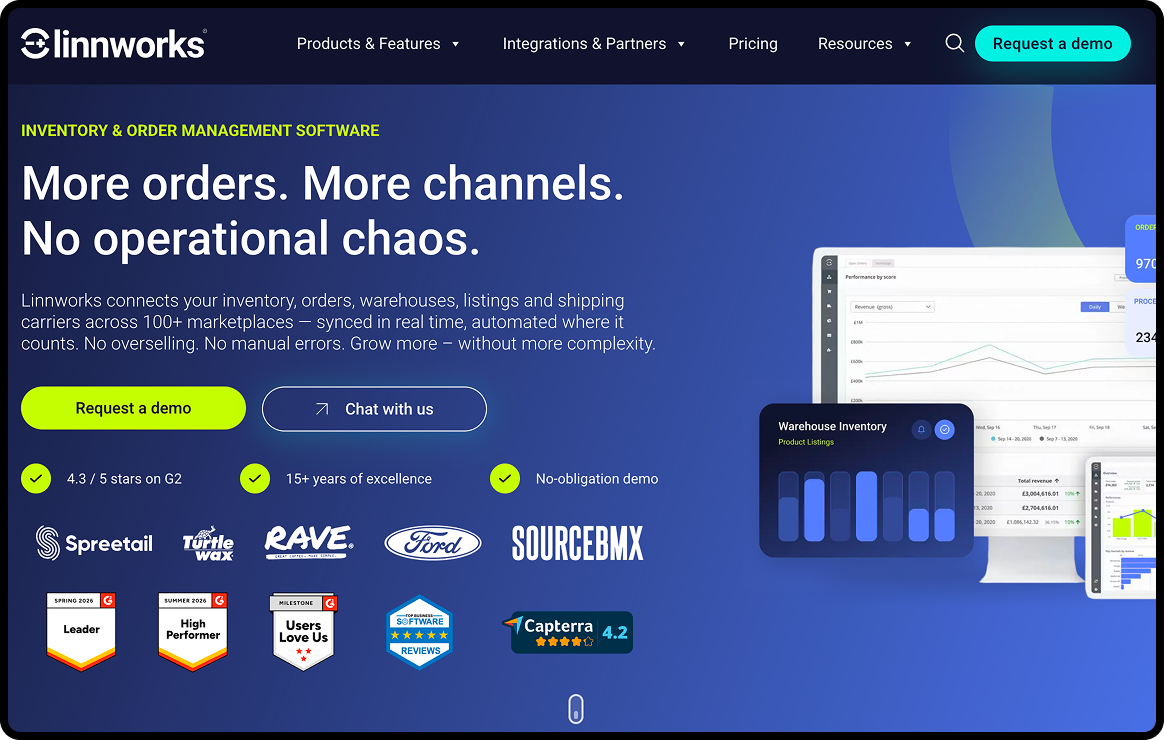
Linnworks is a multichannel platform that focuses on inventory management and order processing. The platform integrates with over 100 marketplaces and shopping carts including Amazon, eBay, Walmart, Shopify, and more. Its pricing plans begin at around $350 per month for 500 orders, with costs scaling up based on order volume. Monthly costs are fixed based on how many orders you process, and there are no revenue-sharing, commissions, or other percentage fees.
Linnworks emphasizes inventory accuracy and automation, with rules-based automation that's designed to simplify complex workflows, and automatic inventory sync between channels.
That said, Linnworks has some significant limitations that sellers should be aware of. The mobile app has been stuck in beta for years and lacks basic functionality, which makes warehouse tasks like receiving inventory or doing cycle counts impractical unless you have a laptop on hand. The platform also has occasional syncing issues with specific channels like Amazon FBA, and the reporting tools aren't as robust as you might expect, particularly when it comes to tracking FBA returns.
Overall, Linnworks makes sense for established sellers who primarily work from desks rather than moving around warehouses, and who are willing to work around occasional technical hiccups in exchange for solid inventory management capabilities.
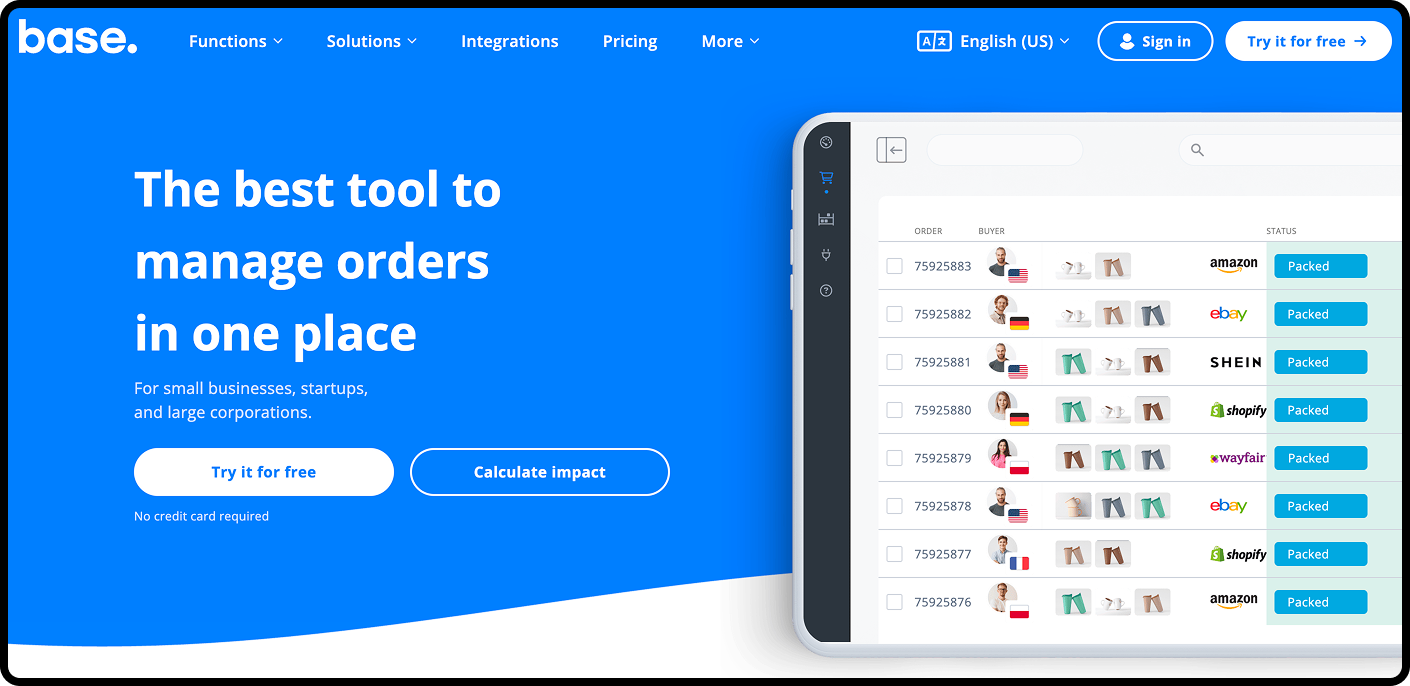
Base.com is a multichannel ecommerce platform that primarily serves European companies. The majority of Base's integrations are geared toward European markets, with a selection of integrations for marketplaces, shopping carts, carriers, and accounting systems. It offers a selection of AI-powered features and automations that enable sellers to automate daily tasks and make their workflows more efficient.
Base offers a free plan for under 100 orders per month, with their lowest-priced plan starting at $39 per month plus $0.19 per order (or approximately $229 total for 1000 monthly orders). For sellers who know they'll need more than what the free plan can offer but don't want to commit just yet, Base offers a free 14-day trial.
As an alternative to ChannelAdvisor, Base is a good choice for sellers whose business is primarily based in European markets, and who need a lower-priced option with core multichannel functionality.
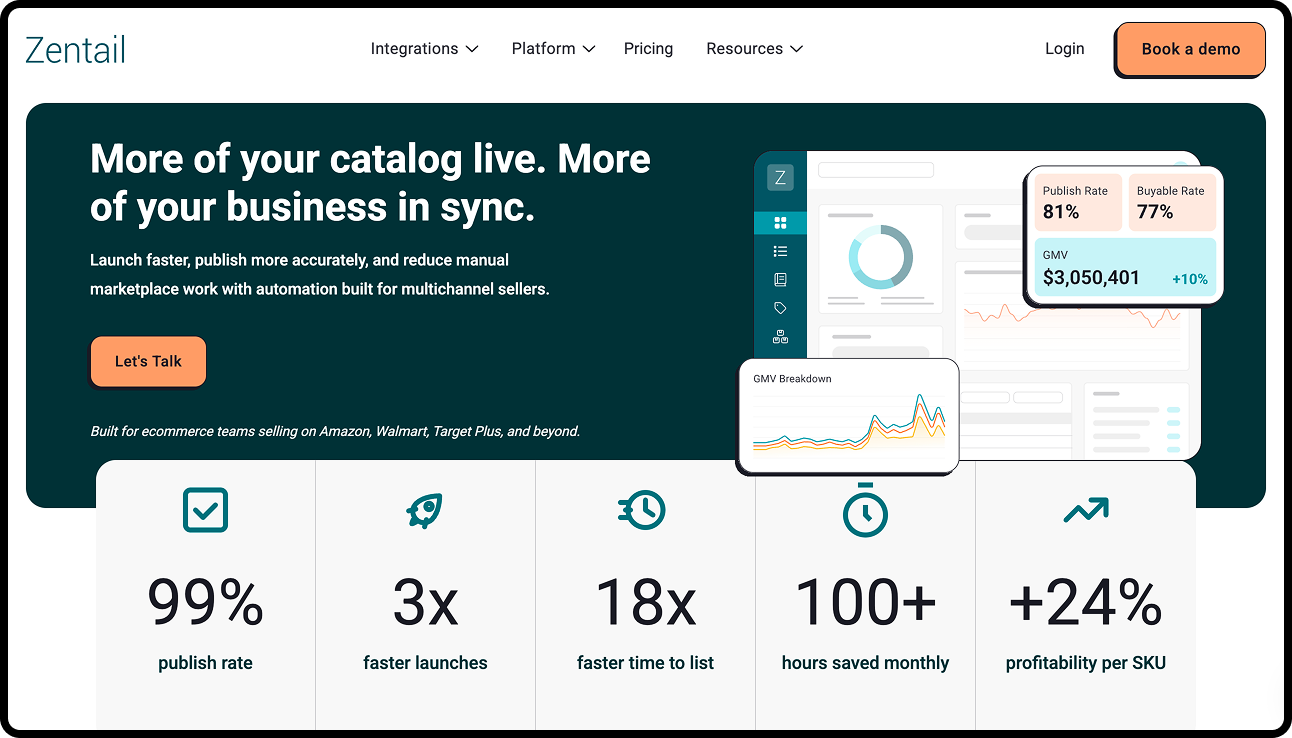
Zentail is a multichannel platform focused on product listing and data management across marketplaces. The platform integrates with major marketplaces like Amazon, Walmart, Target Plus, and eBay, plus shopping carts like Shopify and BigCommerce. In comparison to ChannelAdvisor/Rithum and other tools on our list, its marketplace integrations are far more limited, however. Furthermore, it lacks social media integrations entirely, and offers integration for just two shopping carts: Shopify and BigCommerce.
In terms of features, Zentail offers inventory management with real-time syncing, automated repricing tools, multichannel order management, and analytics dashboards, as well as bulk editing tools that allow sellers to create and edit products at scale.
Zentail's pricing starts at $1000 per month, and it aims its services at established sellers with at least $100,000 in annual sales. While Zentail is designed for mid-sized sellers who need multichannel inventory sync and listing management, it's too expensive for smaller sellers, and its limited sales channel integrations make it unsuitable for sellers who plan a variety of sales channel integrations as part of their growth strategy.
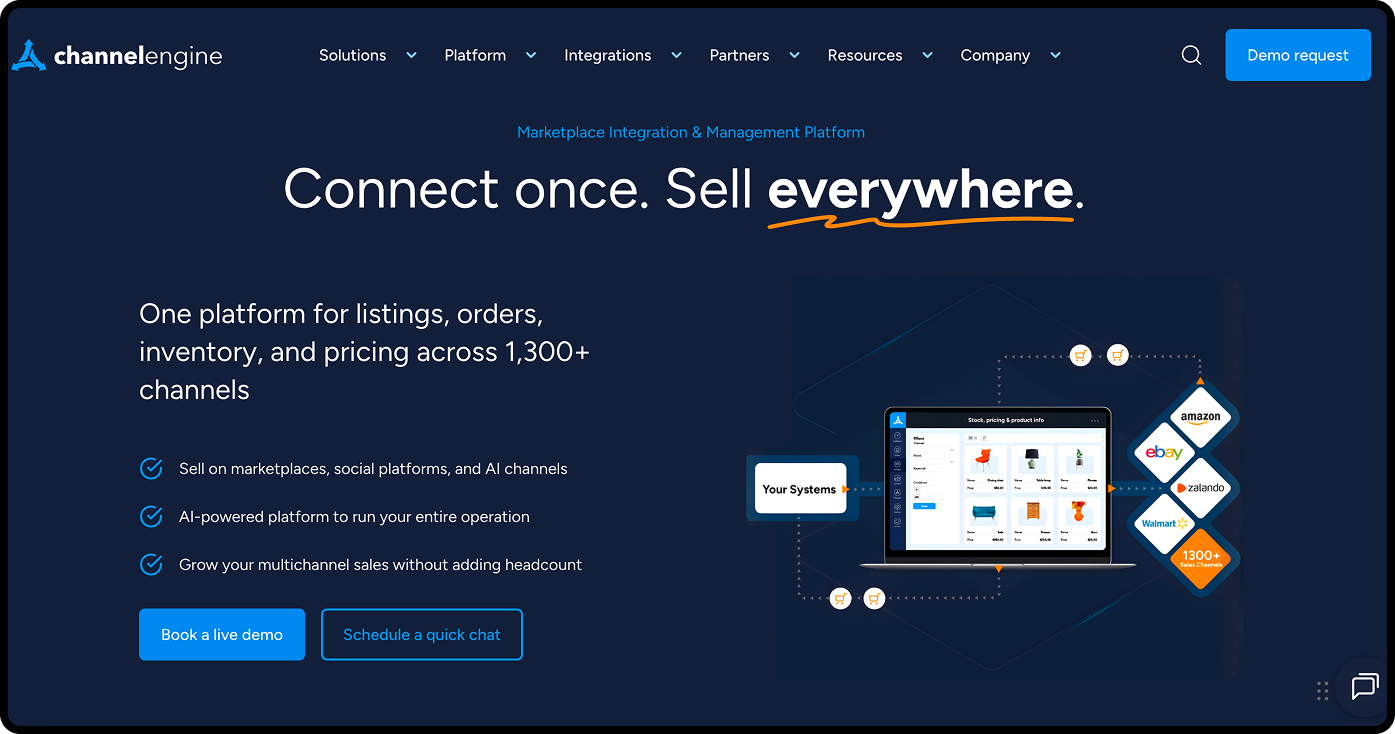
Unlike our previous ChannelAdvisor alternatives, which focused primarily on multichannel functionality, ChannelEngine is designed for companies that already use software to run their business – such as accounting software, inventory systems, or product catalogs – and want to use established data and workflows to sell on various marketplaces. You connect ChannelEngine to whatever software you're already using, and then ChannelEngine syncs your products, inventory, and orders to marketplaces. In addition to multichannel integration, the platform's features include repricing tools, product mapping, and automation.
Like ChannelAdvisor/Rithum, ChannelEngine does not have set pricing; rather, clients need to contact their sales team to get a personalized quote based on their business's specific selling needs. Pricing includes a flat setup fee, plus a performance fee that's based on your sales volume. When you sign up, ChannelEngine assigns you a dedicated team to help with setup and they stay available after you launch.
As a very technical tool that requires extensive setup, ChannelEngine is designed for established companies doing significant sales volume who already use business software and want to connect that software to marketplaces. It's not designed for small businesses with just a couple of marketplaces, or those who have a limited product catalog.
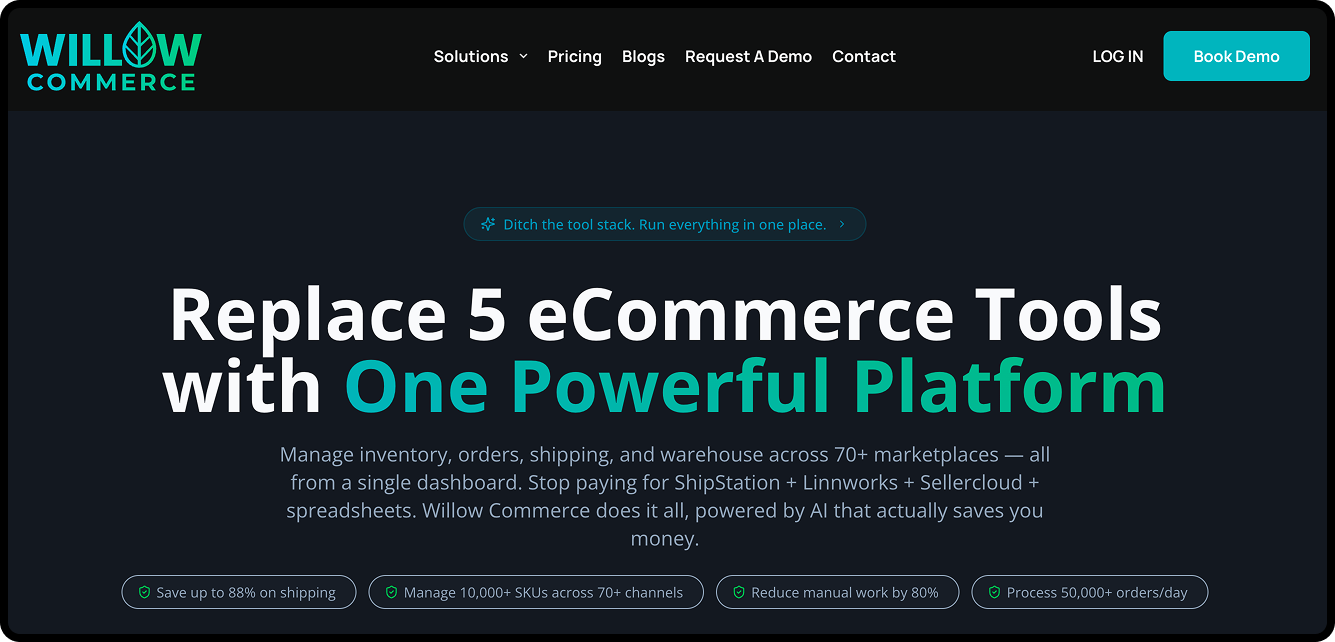
Willow Commerce (formerly GB Commerce) is a multichannel platform aimed at small and medium-sized businesses. The platform integrates with 70-80 marketplaces including Amazon, Walmart, Etsy, Wayfair, Target, and TikTok Shop.
It offers a simpler pricing structure in comparison to ChannelAdvisor's, beginning at $449 per month and scales up as your order volume grows. All features are included in every plan, including warehouse management, shipping automation, accounting integrations, and all marketplace connections.
The onboarding team stays involved throughout implementation and remains available for questions after you launch, which is helpful given that implementation takes some time.
Willow Commerce is designed for growing businesses, though the cost can be high for smaller sellers who aren't yet selling enough to justify costs of $449+ per month.
Choosing the right platform for your business will depend on a variety of factors: your business's size, where you sell, and what features you actually need.
If you're a small seller just starting with multichannel selling or testing new marketplaces, EasyChannel is a great choice with transparent pricing and no revenue-sharing fees, plus you get a 14-day trial for $1 to test everything out before you commit. If you have very low monthly order volumes, you can try Base's freemium plan, which limits you to 100 monthly orders. The downside is that when your business grows, you'll need to move to a paid plan that starts at $39 per month, then charges you an additional fee for each order. For many sellers, this makes Base a less-than-ideal choice, especially those who plan to grow beyond 100 orders. If you're selling heavily in European markets, however, Base is worth considering given its strong European marketplace integrations, particularly Allegro.
EasyChannel also offers a solution that scales with your business, making it a good option for mid-sized sellers with steady volume on multiple channels. It includes smart AI tools for listing creation and optimization, a multichannel product catalog with multi-warehouse support for streamlined inventory management, a multichannel order management platform, and an optional AI-powered multichannel helpdesk suite for simpler customer service across channels. Zentail is another option that offers the same level of features, but it's priced significantly higher at a starting price of $1000 per month for multichannel plans.
For larger businesses with technical teams who need deep customization, Sellercloud offers extensive customization options, though setup is complex and costs start around $1000+ monthly plus integration fees. If you already use business software like SAP or NetSuite and need a reliable solution for connecting it to sales channels, ChannelEngine is the best option, though its pricing is not transparent and enterprise-level.
For most sellers looking to leave ChannelAdvisor, EasyChannel provides the core multichannel features you need – inventory sync, order management, marketplace integrations, and AI-powered tools – without the revenue-sharing fees or multi-year contracts typical of enterprise-level tools. Plus, EasyChannel offers its own enterprise plan, so you can enjoy tailored, custom solutions at any stage of business growth.
Q: What is the cheapest alternative to ChannelAdvisor?
EasyChannel offers transparent and significantly lower pricing than ChannelAdvisor, with a set monthly cost and no revenue-sharing or other order-based fees. EasyChannel's features include AI listing tools, a centralized product catalog, multichannel inventory and order management, AI-powered listing localization for accessible global growth, and much more. You can try out all these features today through the free 14-day trial, no credit card required.
Q: What happened to ChannelAdvisor?
ChannelAdvisor was acquired by CommerceHub in November 2022, and in December 2023, CommerceHub rebranded itself as Rithum. This brought together ChannelAdvisor, Dsco, and Cadeera under one name. The platform continues to operate under the Rithum brand.
Q: Why is ChannelAdvisor so expensive?
ChannelAdvisor's pricing reflects its enterprise-focused business model. It charges an annual subscription fee per module plus 1.3% to 2.4% of your revenue, along with implementation fees and per-channel integration costs. These expenses add up quickly, especially for growing businesses, and the 2-year contract requires a serious commitment. For small to mid-sized sellers, platforms like EasyChannel offer similar multichannel management features at a fraction of the cost without revenue-sharing fees or multi-year commitments.
Q: Is ChannelAdvisor the same as Rithum?
Yes, ChannelAdvisor is now part of Rithum after CommerceHub acquired ChannelAdvisor in 2022 and then rebranded the combined company as Rithum in December 2023. The ChannelAdvisor product line still exists within Rithum's broader commerce platform, but operates under the Rithum brand name.
You made it! and you're now more equipped to sell more online!
Enjoy a reward for your hard work!
Learn more about how EasyChannel works for online sellers.